
Is Divorce Mediation Right For You?
Wisconsin family law attorney and mediator Ryan Kautzer explains the mediation process, its benefits and when mediation may be the right choice.
You and your spouse agree that divorce is the right decision. After discussing your options, you find that you both agree on many issues…except one: the kids.
Your spouse does not want to share time with the kids. They believe that since they are the primary caretaker, they should have a majority of the placement time with the kids. You do not agree, but also do not want to enter a lengthy and expensive custody battle.
After some research, you discover mediation. You learn that mediation works best for couples who are willing to negotiate, but need the guidance of a neutral third party to find common ground and reach a mutually agreeable divorce settlement. Could this be the best path forward?
What is Mediation?
Mediation is a confidential, problem-solving process in which a neutral lawyer helps disputing parties negotiate a voluntary settlement. While commonly associated with family law, mediation can also be helpful for resolving business, workplace, civil, and community conflicts.
In the context of divorce or legal separation, mediation involves a lawyer mediator helping a couple through all necessary decisions and documents needed for separation or divorce. With the help of the mediator, both parties gather information, discuss options, and create their own mutually acceptable agreement for court approval.
The Divorce Mediation Process
The divorce mediation process can be broken down into the following steps:
What Are the Benefits of Mediation?
(#1) Lowered Cost
It generally costs less to mediate than to litigate or hire an adversary attorney. In Wisconsin, the total cost of private divorce mediation is typically between $4,000 – $8000+ according to divorce.law. By comparison, a contested Wisconsin divorce can cost between $11,000 – $30,000, with complex cases involving custody battles, business valuations, and hidden assets reaching $50,000 to $100,000.
(#2) Faster Process
The mediation process usually moves faster than divorces on the litigation track. Under Wis. Stat. § 767.335 couples must wait 120 days after filing for divorce before the divorce or legal separation can be finalized. In divorce mediation, this waiting period provides an opportunity for couples to work through disagreements and prepare their divorce settlement.
Because most couples are able to complete mediation within the 4 month waiting period, they are often ready for their final stipulated hearing immediately after their mandatory waiting period ends. Conversely, a high-conflict litigated divorce can sometimes take up to 24+ months to be completed. These cases require formal discovery, temporary order hearings, attorney correspondence, pre-trial conferences, and long wait-times for the final trial date to be scheduled.
(#3) More Control Over Outcomes
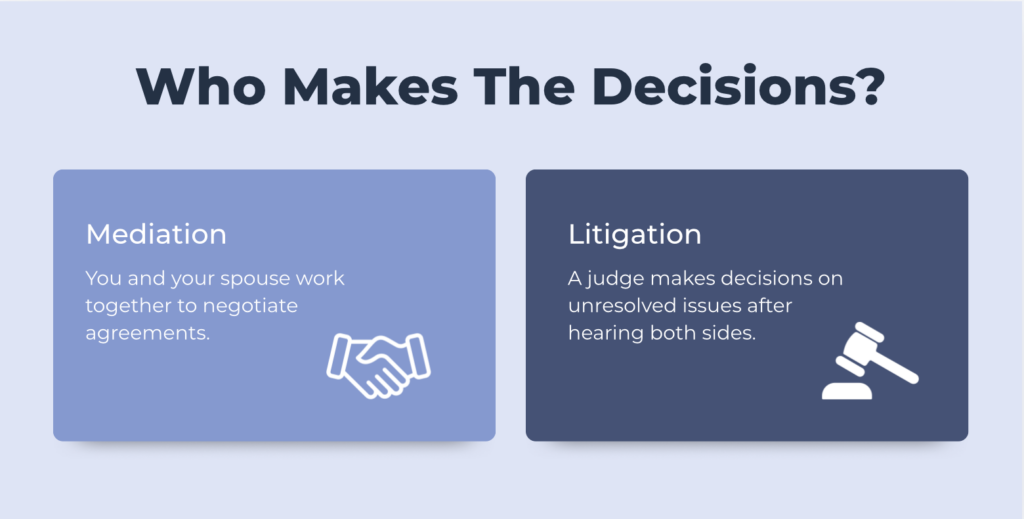
In mediation, the parties are in control of the outcomes. If litigated, a court makes decisions about the children and finances that people have worked hard for during their marriage. As a result, many individuals are happier with the outcomes of mediation, because it is not being forced on them by a judge.
When Might Mediation NOT Be Appropriate?
While the benefits of mediation are undeniable, it is still important to acknowledge that for certain cases mediation may not be the best path forward. Mediation may not be suitable if the divorce or legal separation involves the following:
- Domestic violence or a history of abuse.
- Unwillingness to negotiate.
- Significant power imbalances or history of financial abuse.
Remember: Lawyer Mediators Are NOT Your Lawyer
One common misconception about lawyer mediators is that they are representing both parties during a divorce or legal separation. This is NOT true. The lawyer mediator’s role is to remain neutral while educating the parties on the law, and facilitating negotiation and communication between the parties involved. They do not represent either spouse, provide individualized legal advice or advocate for one individual’s best interests or wishes over the other.
You Don’t Have To Choose One or the Other.
Choosing mediation does not mean you have to navigate the process unprotected. If you and your spouse agree to mediation, it is still possible to hire an attorney as your legal advocate. This way you can benefit from the quick process and increased control that mediation offers while ensuring your rights are being protected. An independent attorney could provide you with legal advice and review your proposed agreements throughout the mediation process.
If you are unsure whether you would benefit from legal representation for mediation, consulting with an attorney can help you make an informed decision. Additionally, even if you decide not to have an attorney present during your mediation sessions, you can still consult with one before, during, or afterwards to better understand your options.
Why Choose HKK Law Offices For Mediation?
Final Thoughts
Attorney Ryan Kautzer at HKK Law Offices can facilitate the guidance you need to make the best family and financial decisions as you navigate separation and divorce. He is a seasoned lawyer with specialized training in Wisconsin mediation that puts you and your partner back in control.
If you have any additional questions or would like to learn more about your options, we invite you to contact HKK Law Offices. Our attorneys are available to meet by phone, video conference, or in person at our offices in Sheboygan, Mequon, and Random Lake. For more educational family law and estate planning content, check out our TikTok, YouTube, Instagram, Facebook, and LinkedIn platforms.
Disclaimer: This article is provided for general educational purposes only and should not be considered legal advice. Reading this article does not create an attorney-client relationship. Because every situation involves unique facts and circumstances, you should consult a qualified attorney regarding your specific legal needs.